The Hike Above Longyearbyen, and Why It Costs $161
Platafjellet is the flat-topped mountain you can see from your hotel window. You cannot walk up it alone, and the reason is a rifle rather than a rope.
 By Lars Hansen, Norway tour specialist covering Arctic Norway and Svalbard
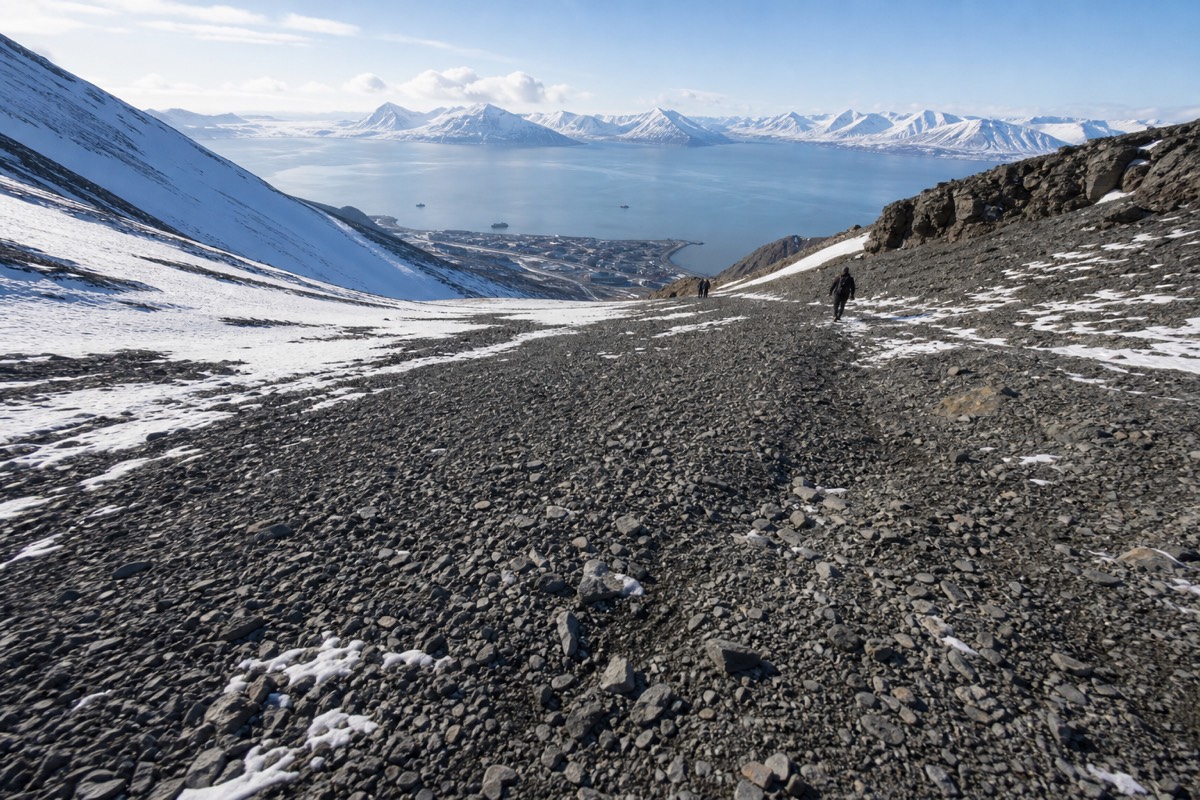
Platafjellet is directly above Longyearbyen. You can see the whole ascent line from the main street, it takes an hour and a bit, and there is no technical difficulty anywhere on it. In the Alps you would walk out of your hotel and be at the top before lunch.
Here you book a guide, pay $161, and the guide brings a rifle. That is not a service upgrade. It is the mechanism that makes the walk legal.
The rule that makes every hike guided
Outside the settlements, everyone must take measures against polar bear attack and be equipped with means of frightening one off. Visitors on an organised tour are exempt from that equipment duty, because the operator carries it.
Getting your own permission takes up to eight weeks and requires competence you probably do not have, as the Governor of Svalbard's firearms guidance makes clear, and the 2025 environmental rules govern what a party may do once it is out there. So the guided walk is not something you buy instead of walking alone. It is the only version of the walk that exists.
| Guided hike | Walking it yourself | |
|---|---|---|
| Legal | Yes | Only if properly equipped and permitted |
| Time to arrange | Book online | Up to eight weeks for firearm permission |
| Search and rescue insurance | Operator's, normally | Yours to arrange, and required |
| Cost | $161 upward | The permission process, plus rifle hire |
| Realistic for a four-day trip | Yes | No |
The full picture is in do you need a guide in Svalbard, and the rest of the visitor obligations in the rules guide.
Which hike, and how hard
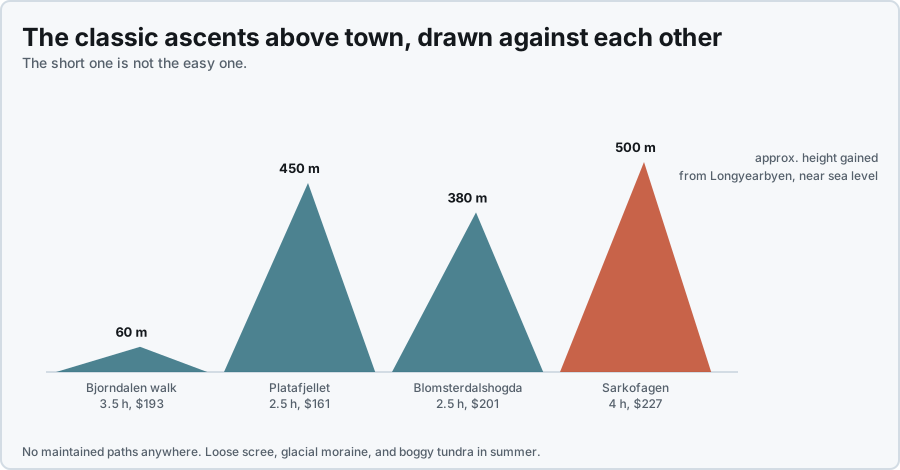
Eleven bookable hikes run from Longyearbyen, and they range from a town walk that stays inside the boundary to a four-hour summit that people consistently underestimate.
| Route | Time | From-price | Honest effort |
|---|---|---|---|
| Town walking tour | 2.5 hours | $112 | Flat, inside the settlement, no rifle needed |
| Bjorndalen Arctic walk | 3.5 hours | $193 | Easy to moderate, valley floor. Best rated at 4.7 across 18. |
| Platafjellet, iconic hike | 2.5 hours | $161 | Moderate. A steady climb on loose ground. |
| Blomsterdalshogda | 2.5 hours | $201 | Moderate, quieter than Platafjellet |
| Platafjellet, panorama version | 3.5 hours | $315 | Same mountain, longer route |
| Sarkofagen summit | 4 hours | $227 | Hard. Sustained, scree, exposed top. |
| Glacier snowshoe | 3.5 to 5 hours | $272 to $300 | Moderate to hard in deep snow |
| Ski touring | 5 hours | $451 | Hard, and you need to be able to ski |
Sarkofagen is the one people get wrong. Four hours sounds like an afternoon, and then you are on loose moraine with no path, gaining height steadily, with an exposed section near the top. Jason, from the United States, put it accurately in July 2026: "Nice hike with knowledgeable Guide. Moderate difficultly given some area of loose terrain, distance and elevation were not difficult."
Loose terrain is the operative phrase. Nothing in Svalbard has a maintained path.
What the ground is actually like
There are no trees, no paths and no soil in the sense you are used to. What you walk on is glacial moraine, loose scree, and in summer a layer of boggy tundra sitting on permafrost that cannot drain.
That combination is why a Svalbard hike is harder than the same distance almost anywhere in Europe. There is nothing firm underfoot and nothing to break the wind. Waterproof boots with ankle support are the item that decides your day, and they are the one thing operators do not always supply.
| Underfoot | Where | What it needs |
|---|---|---|
| Loose scree | The ascents, especially Sarkofagen | Ankle support, patience on the descent |
| Glacial moraine | Valley approaches | Boots, and a slow pace |
| Boggy tundra over permafrost | Summer valley floors | Waterproof boots. It cannot drain. |
| Meltwater streams | Summer routes, rising through the day | Expect wet feet on the longer walks |
| Deep powder | Winter snowshoe versions | Roughly double the effort of summer |
The view is the point
From the top of Platafjellet, the town is a grid of coloured rectangles a long way below, the fjord runs out to the west, and the mountains on the far side sit in a line like a diagram. It is the photograph everyone comes back with, and it earns the position.
Sarkofagen gives you more: the Longyearbreen glacier below you, and a genuine summit feeling that the plateau does not deliver. It costs two more hours and considerably more effort, and you can check the tour and its dates here.
If you want the view for the least output, the Bjorndalen valley walk at $193 is the best-rated hiking listing on the archipelago at 4.7 across 18 reviews and involves almost no ascent, taking you along the valley past the Seed Vault with wildlife chances instead. You can check live availability and prices on GetYourGuide for the Platafjellet version, and the full set is on the hiking tours page.
The guide is doing more than you think
Watching a Svalbard hiking guide work, the rifle is the least of it. They are reading the ground for crevasses on any glacier approach, checking sight lines across the valley constantly, choosing a line that keeps the group visible to each other, and deciding when the weather has changed enough to turn round.
Reviewers pick up on this without quite naming it. Guides get praised for judgement, pacing and adapting to the group rather than for anecdotes. Petra, in June 2026 after the midnight sun hike, noted that the guide matched the pace to the group so it worked for everyone, which sounds unremarkable until you have been on a hike where nobody did that.
When to go
Snow-free hiking runs roughly June to September, with July and August the most reliable. Outside that, the same terrain is snowshoe country from about November to April, which is a different and harder day.
April and May are the awkward months: too wet for snowshoes, too snowy for boots. If you want to walk, go in summer. If you want the winter version, the snowshoe routes on the ice cave and glacier page often finish underground, which is a considerably better day than a plain walk in the dark.
Which month suits you overall is worked through in the best time to visit guide.
Questions about hiking in Svalbard
Can I hike alone in Svalbard if I stay close to town?
Only inside the settlement boundary, which is signposted and closer to the centre than the scenery suggests. Platafjellet, the mountain you can see from the main street, is outside it. The polar bear protection duty applies the moment you cross, and there is no informal allowance for short walks.
How fit do I need to be for a Svalbard hike?
For the valley walks, reasonably ordinary fitness. For Platafjellet, comfortable with a sustained hour of ascent on loose ground. For Sarkofagen, genuinely fit, because four hours here is more work than four hours on a European path. Snowshoeing uphill in deep powder is roughly double the effort of the same slope in summer.
What boots do I need?
Waterproof, with ankle support, and they are the one item operators do not reliably supply for summer hikes. The ground is loose scree, glacial moraine and boggy tundra sitting on permafrost that cannot drain. Trail runners will get you wet feet and turned ankles in about equal measure. Some operators rent boots, so check the listing.