Where to Stay in Longyearbyen (2026)
Longyearbyen's bed supply has not grown as fast as its visitor numbers, and you feel that in the price.
 Verified by Lars Hansen, Norway tour specialist covering Arctic Norway and Svalbard
Short answer
Longyearbyen accommodation runs roughly £150 to £280 a night, and the ladder starts at guesthouse level with nothing beneath it. There is no hostel scene and no camping in town. Almost everything is within walking distance of the centre, and 57 of the 62 bookable tours include pickup, so location matters far less than availability.
Longyearbyen has roughly 2,500 residents and took about 140,000 holiday and leisure overnight stays in 2025. That ratio is the whole story of accommodation here. There is not much of it, demand is rising faster than supply, and the bottom rung of the ladder is missing entirely.
Where should you stay in Longyearbyen?
Anywhere central, because the town is twenty minutes end to end on foot and 57 of the 62 bookable tours collect you from your accommodation. The real decision is what level of comfort you want, not which street. The ladder runs from guesthouse to full hotel, with no hostel tier beneath it.
| Type | Roughly per night | What you get | Best for |
|---|---|---|---|
| Guesthouse, shared facilities | £150 to £180 | A bed, shared bathroom, kitchen access, often a strong social feel | The budget floor, and it is not that low |
| Guesthouse, private room | £180 to £220 | Private room, sometimes private bathroom | Most independent travellers |
| Mid-range hotel | £200 to £250 | Proper hotel room, breakfast, restaurant on site | Couples and anyone wanting to not think about it |
| Higher-end hotel | £250 to £280+ | Larger rooms, better restaurant, more service | Short trips where the room matters |
| Camping | Seasonal, and outside town | A pitch, in the summer months only | Committed campers only. Not a casual saving. |
| Hostel dorms | Does not exist |
That missing bottom rung is the single biggest difference from budgeting for mainland Norway, and it is what makes the total trip cost higher than people expect even when the tours look reasonable.
Which places can you actually book?
Nine Longyearbyen properties are bookable through Expedia, and between them they cover the whole ladder: two hostel-grade options, a set of mid-range hotels, and the two the town treats as its best rooms. Guest ratings below are Expedia's own, and they are unusually high across the board.
Ordered by guest rating, not by what pays us. Rates move with the season, so the live price is on the listing.
Funken Lodge · 9.6 across 499 guest reviews · the town's best rooms, up the hill, champagne bar Check rates ›
Basecamp Spitsbergen Hotel · 9.6 across 70 guest reviews · trapper-cabin style, driftwood and sealskin, the most characterful room in town Check rates ›
Svalbard Hotell · Polfareren · 9.4 across 615 guest reviews · central, modern, the reliable mid-range pick Check rates ›
Svalbard Hotell · The Vault · 9.4 across 463 guest reviews · same operator, central, strong breakfast Check rates ›
Svalbard Hotell · Lodge · 9.4 across 79 guest reviews · aparthotel by the water, useful if you want a kitchen Check rates ›
Mary-Ann's Polarrigg · 9.0 across 394 guest reviews · old miners' barracks, full of salvage and character, the one people write home about Check rates ›
Radisson Blu Polar Hotel Spitsbergen · 8.8 across 985 guest reviews · the largest hotel in town and the most reviewed by a distance Check rates ›
Coal Miners' Cabins · 8.2 across 660 guest reviews · converted miners' dormitory, the cheapest real bed, a walk from the centre Check rates ›
Gjestehuset 102 · guesthouse near the church, shared facilities, the closest thing to a hostel Check rates ›
Two notes on that list. Coal Miners' Cabins is the cheapest genuine bed and it sits a couple of kilometres from the centre, which is a pleasant walk in July and a real one in January. And Mary-Ann's Polarrigg divides people: it is an old miners' barracks stuffed with salvaged Arctic junk, and guests either love it or wanted a normal hotel. Read its reviews rather than ours.
These are affiliate links to Expedia. You pay the same, we may earn a commission, and the ordering above is by guest rating rather than by what pays best. The full statement is on the disclosure page.
Does location matter in Longyearbyen?
Barely. The centre is walkable in twenty minutes, the airport bus drops at the hotels, and almost every tour includes pickup from where you are staying. What does matter is whether you can walk to a restaurant at nine in the evening in February, which argues for being central rather than at the valley end.
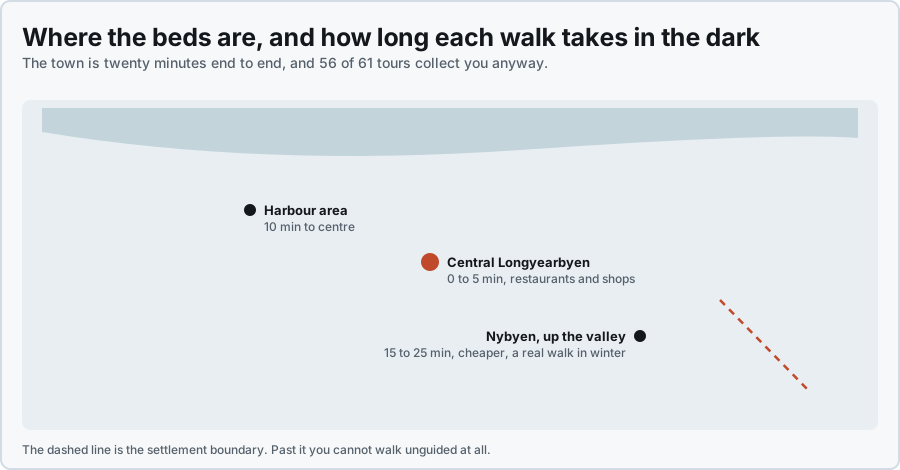
| Area | Walk to centre | Notes |
|---|---|---|
| Central Longyearbyen | 0 to 5 minutes | Restaurants, shops, museum. The obvious choice. |
| Nybyen, up the valley | 15 to 25 minutes | Quieter, cheaper, a real walk in winter darkness |
| Near the harbour | 10 minutes | Handy for boat tours, though they collect you anyway |
| Outside the settlement | Not walkable | Some lodges exist. You are dependent on transfers and cannot walk out. |
The Nybyen walk is worth thinking about honestly. In July, in daylight, it is pleasant. In January, in the dark, into wind, at -14 °C, after dinner, it is a different proposition, and it is close to the settlement boundary.
What a night actually buys you by season
Rates hold up better here than in most destinations because there is no spare stock to discount, but the shoulder months are noticeably softer.
| Period | Typical nightly rate | Availability | Notes |
|---|---|---|---|
| March to April | Top of the range | Books out months ahead | Peak winter activity season |
| June to August | Top of the range | Books out months ahead | Peak summer, cruise turnarounds |
| Late September | Softer | Reasonable | The value window, with boats still running |
| October to early November | Softest of the year | Good | Also the thinnest for activities |
| Christmas and New Year | Firms up sharply | Tight | Longyearbyen makes a real event of it |
| January to February | Moderate | Reasonable | Polar night, fewest visitors |
When should you book accommodation?
Earlier than the tours, and considerably earlier than the flights. March, April, July and August rooms go months ahead, and there is no overflow capacity to absorb late demand. If your dates are fixed, book the bed first.
The supply constraint is real and structural: Longyearbyen's overnight-stay figures are tracked annually by the environmental monitoring programme, and Svalbard Airport passenger numbers have risen faster than beds have been added. Building in permafrost is expensive, the town has limited land and a housing shortage for its own residents, and hotel capacity has not tracked the 8.4 per cent year-on-year growth in airport passengers.
What is it actually like staying there?
Shoes come off at the door, everywhere. Rooms are warm, well insulated and smaller than the price suggests. Blackout curtains are standard because they have to be. Breakfast is usually included at hotel level and worth taking, since eating out three times a day is the fastest way to burn a budget.
Visit Svalbard lists the town's accommodation alongside the operators. Practical points that catch people:
- Shoes off. Universal, in guesthouses, hotels and museums. A leftover from the coal-dust era that outlived the coal. Pack decent socks.
- Blackout curtains. Essential from late April to late August, when the sun never sets. Bring an eye mask in case yours are thin.
- Self-catering saves real money. Guesthouses with kitchens let you eat breakfast and lunch in, which is the single biggest lever on the food budget.
- Restaurants fill. Book a table on the day you land, not the day you want it. Cruise days make this worse.
- Laundry is often available. Useful if you are hiring outer kit and living in the same base layers.
Should you stay outside Longyearbyen?
Only if isolation is the point. A handful of lodges sit outside the settlement, and the trade-off is a genuinely remote setting against total dependence on transfers and no ability to walk anywhere, because you are past the boundary where the polar bear protection duty applies.
For a three or four-day trip built around booked tours, staying in town is simpler and cheaper, not least because 57 of the 62 listings collect you from the door. The cheapest of them is a walking tour that never leaves the settlement, and you can check live availability and prices on GetYourGuide for it. For a longer stay where the accommodation is itself the experience, an outside lodge changes the character of the trip considerably.
Whichever you choose, book something for the day you land: the underground mine tour runs year-round whatever the weather does, at 4.8 across 491 reviews, so check availability here. The tours are the thing to plan around. What is bookable depends entirely on your month, as the season comparison sets out, and the guide requirement that governs all of it is explained in the guide guide.
Common questions about staying in Longyearbyen
Is there a hostel in Longyearbyen?
Not in the sense most travellers mean. There are guesthouses with shared facilities and a social atmosphere, which is the closest equivalent, but they start around £150 a night rather than the £30 a hostel bed would cost on the mainland. The absence of a budget tier is the defining feature of accommodation here.
Can you camp in Longyearbyen?
There is a seasonal campsite outside the town, open in the summer months, and it is a genuine option for committed campers with proper equipment. It is not a casual way to save money on a short trip: you are outside the settlement, the weather is what it is, and you still need to get to and from the town for every tour. Most visitors take a room.
How much does a hotel cost in Longyearbyen?
Roughly £150 to £280 a night depending on level and season, with the peak March to April and June to August weeks at the top of that. Prices are firm rather than dynamic, because supply is short: there is no late-availability discounting the way there is in a city with spare rooms.
Do hotels in Longyearbyen include breakfast?
Usually at hotel level, and often not at guesthouse level, where you get kitchen access instead. Take the breakfast if it is included. Eating out three times a day in Longyearbyen is the fastest way to overshoot a budget, and a proper breakfast before a nine-hour boat day is worth more than it would be anywhere else.
Is it worth staying longer to save on flights?
Almost never. A night in Longyearbyen costs more than the fare difference on most Oslo routings, and Longyearbyen itself only holds about half a day of unguided interest. The better use of extra nights is more tours, up to about three or four, after which the categories start repeating, as how many days you need explains.